
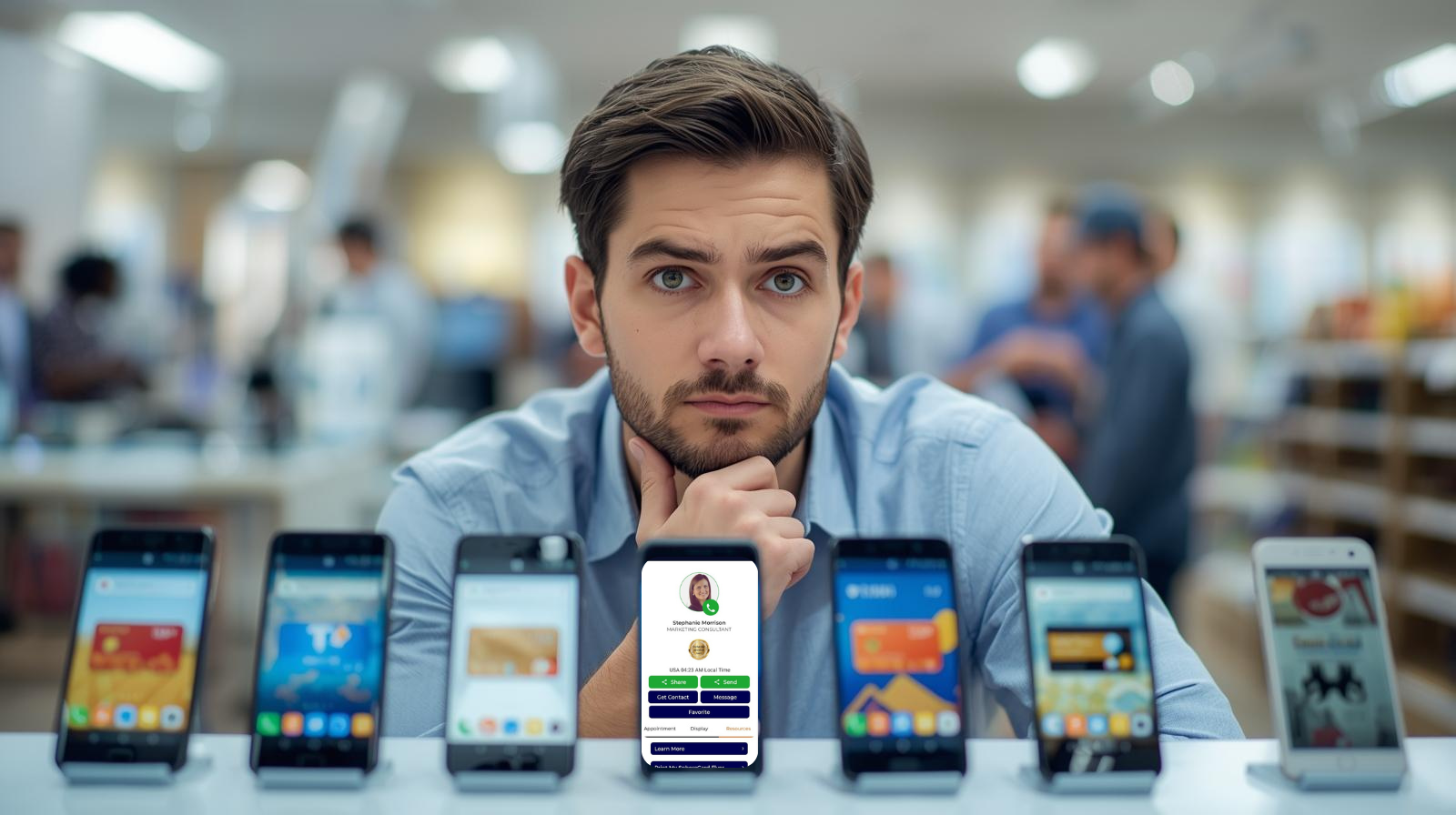
How the noisy digital business card ecosystem is hiding tools like Spherecard, a marketing card built to grow your business.
We’ve quietly lowered our standards.
The average app is “good enough.”
The average website is “good enough.”
The average digital business card is “good enough.”
And when “good enough” becomes the norm, something subtle but costly happens:
Tools that are built to help you grow your business get mistaken for just another checkbox item in your tech stack.
That’s the reality SphereCard marketing business card lives in today.
Eight Years of Building in a Noisy Category
SphereCard didn’t show up as a weekend project.
It’s been in development for around eight years—long enough to watch the “digital business card” space explode with new names, quick clones, and one-feature tools.
During that time, SphereCard was built around harder questions than “How do we share contact info with a QR code?”:
- How do you turn a hello into a real opportunity?
- How do you build trust and credibility, not just visibility?
- How do you make it easy for people to book you, refer you, and remember you—without needing a bulky website?
But because SphereCard is technically a “digital business card,” it often gets judged by the lowest expectations of that label. People see the category and assume they already know the story.
“I’ve seen digital cards before. I get the idea.”
In that moment, years of development get flattened into a mental shortcut.
The Ecosystem Problem: Lowered Expectations
This isn’t really a SphereCard problem.
It’s an ecosystem problem.
The market is full of tools that:
- Look modern but don’t meaningfully grow your business,
- Capture contact info but don’t build trust,
- Help you say “I’m updated” but don’t help you say “I’m worth choosing.”
Over time, that trains people to expect less.
So when they hear “digital business card”, they don’t think:
“Oh, a compact, always-ready marketing system.”
They think:
“Nice QR code. Next.”
SphereCard lives in that gap between what people expect a digital business card to be and what it was actually built to do.
What Underuse Really Means
Today, SphereCard is still underused relative to what it can do.
Not because it’s unfinished. Not because it’s missing features. But because it’s buried under the same label as tools that do far less.
The real cost of that underuse doesn’t show up on SphereCard’s balance sheet alone. It shows up in the missed potential of the people it was designed to serve:
- The freelancer who needs every first impression to feel professional and credible.
- The coach who lives and dies by word-of-mouth and referrals.
- The real estate agent or tour guide who meets people in motion and needs to turn those quick encounters into booked appointments.
- The small business owner whose current “digital business card” is just a static link that doesn’t really say anything about who they are.
When a tool is built to help you show your value, capture interest, and make it easy to book or refer you—and you never even explore it—that’s not neutral.
That is opportunity quietly going to waste.
A Quick Look at What “Different” Actually Looks Like
Forget the label for a second. Forget “digital business card.”
Think of SphereCard as a compact marketing and credibility system in one link.
Imagine a few simple scenarios:
- The on-the-go professional
You meet someone at an event. Your phone is dead. Instead of awkwardly promising to “connect later,” you borrow their device, have them search your name on the SphereCard marketplace, and your full, focused profile appears: who you are, what you do, how to contact and book you—right there. - The referral that actually lands
A happy client wants to recommend you. Instead of fumbling with screenshots, they share your SphereCard link or QR. Their friend opens it and instantly sees your intro, your offer, your reviews, and a way to book you—no rabbit holes, no searching across social media. - The “I’m serious about my craft” moment
Someone looks you up before a meeting. Instead of a scattered mix of social links and outdated sites, they find one clean, focused card that tells a clear story: this is who you are, how you help, and how to work with you.
That’s the real point: SphereCard isn’t about showing you exist; it’s about showing you’re ready.
Digital Business Cards vs. Digital Growth Systems
Most digital business cards stop at:
“Here’s my contact info and some links.”
SphereCard was built to ask:
“What needs to be in place so that when someone lands here, they’re more likely to trust me, contact me, and book me?”
That’s why it focuses on:
- Clear presentation, not cluttered mini-websites.
- Trust signals—like reviews, reputation tools, and focused offers—rather than just handles and icons.
- Ways to be found by name, role, or business type on the SphereCard marketplace.
- A built-in path from “hello” to “booked” instead of just “saved to contacts.”
It’s a different philosophy, not just a different design.
The Hidden Cost of Staying with “Good Enough”
We don’t always feel the cost of our tools. We just feel the symptoms:
- People say “I’ll check you out later” and never do.
- Referrals get lost because sharing you isn’t simple.
- Strangers feel curious but not convinced.
When your networking tools don’t help you stand out or get booked, it doesn’t feel like a failure—it just feels like “this is how things are.”
But it’s not.
Every time someone almost reaches out and doesn’t, that’s a tiny lost opportunity.
Every time a happy customer wants to recommend you but doesn’t have a clean way to do it, that’s a quiet leak in your growth.
Tools like SphereCard exist to patch those leaks. When they’re overlooked, the leak doesn’t go away. It just keeps dripping.
This Isn’t a Complaint. It’s a Challenge.
This isn’t about saying, “People don’t understand SphereCard.”
It’s about asking a larger question:
“Have we gotten too comfortable with average when it comes to how we show up professionally?”
Whether you ever touch SphereCard or not, that question matters.
- Are your tools helping you look like the professional you actually are?
- Do they make it easy for people to trust, book, and refer you?
- Or are they just helping you say, “I have something,” without helping you grow?
SphereCard happens to be one answer to that problem—a tool built over years to raise the standard for what a “card” can do.
But the deeper invitation is this:
Stop accepting “good enough” from tools that represent your work.
A Quiet Invitation to Raise the Bar
If you’ve read this far, you’re probably not satisfied with blending in.
You don’t need another icon on your home screen.
You need something that:
- Shares who you are clearly,
- Shows why you’re credible,
- Makes taking the next step—contacting you, booking you, or referring you—feel effortless.
SphereCard won’t shout over the noise for you.
But it will be there when someone searches your name and opens your card—and in that moment, you either look average or you look intentional.
The ecosystem might not fully recognize the difference yet.
You don’t have to wait for it to catch up.
You can raise your own standard now.